Environment: milieu / climate zone / depth range / distribution range
Ecology
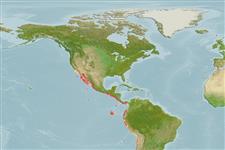
Marine; demersal; depth range 10 - 355 m (Ref. 58302). Subtropical; 42°N - 25°S, 125°W - 70°W
Eastern Pacific: southern California, USA to Peru. Reported from the Galapagos Islands (Ref. 5530). Occurrence in British Columbia, Canada remains questionable (Ref. 6885). Not in Compagno's 1999 checklist (Ref. 35766).
Size / Weight / Age
Maturity: Lm ? range ? - ? cm
Max length : 167 cm WD male/unsexed; (Ref. 122662)
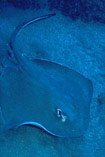
Inhabits sandy areas, often around rocks and kelp beds (Ref. 2850). Benthic (Ref. 58302). Feeds on crabs and mollusks (Ref. 4925); and worms (Ref. 114953). Ovoviviparous (Ref. 50449); litters of 1-4 pups and gestation period of approx. 3 months (Ref. 114953).
Life cycle and mating behavior
Maturity | Reproduction | Spawning | Eggs | Fecundity | Larvae
Exhibit ovoviparity (aplacental viviparity), with embryos feeding initially on yolk, then receiving additional nourishment from the mother by indirect absorption of uterine fluid enriched with mucus, fat or protein through specialised structures (Ref. 50449). Distinct pairing with embrace (Ref. 205).
Last, P.R., W.T. White, M.R. de Carvalho, B. Séret, M.F.W. Stehmann and G.J.P. Naylor, 2016. Rays of the world. CSIRO Publishing, Comstock Publishing Associates. i-ix + 1-790. (Ref. 114953)
IUCN Red List Status (Ref. 130435)
Threat to humans
Traumatogenic (Ref. 4716)
Human uses
More information
ReferencesAquacultureAquaculture profileStrainsGeneticsElectrophoresesHeritabilityDiseasesProcessingNutrientsMass conversion
Tools
Special reports
Download XML
Internet sources
Estimates based on models
Preferred temperature (Ref.
123201): 12.1 - 21.3, mean 14.9 °C (based on 102 cells).
Phylogenetic diversity index (Ref.
82804): PD
50 = 0.5039 [Uniqueness, from 0.5 = low to 2.0 = high].
Bayesian length-weight: a=0.00646 (0.00265 - 0.01571), b=3.06 (2.86 - 3.26), in cm total length, based on LWR estimates for this (Sub)family-body shape (Ref.
93245).
Trophic level (Ref.
69278): 3.5 ±0.50 se; based on food items.
Resilience (Ref.
120179): Low, minimum population doubling time 4.5 - 14 years (Assuming fecundity<100).
Fishing Vulnerability (Ref.
59153): Very high vulnerability (90 of 100).
Nutrients (Ref.
124155): Calcium = 17.9 [3.6, 84.2] mg/100g; Iron = 0.711 [0.182, 2.072] mg/100g; Protein = 23.3 [20.5, 25.9] %; Omega3 = 0.279 [0.080, 0.816] g/100g; Selenium = 29.2 [9.0, 83.0] μg/100g; VitaminA = 7.69 [2.88, 20.54] μg/100g; Zinc = 0.566 [0.279, 1.018] mg/100g (wet weight);