| Family: |
Gobiidae (Gobies), subfamily: Gobiinae |
| Max. size: |
8.6 cm TL (male/unsexed) |
| Environment: |
reef-associated; brackish; marine; depth range 2 - 10 m |
| Distribution: |
Western Pacific: Java to the Solomon Islands, north to Yaeyama Islands; Pohnpei in Micronesia. |
| Diagnosis: |
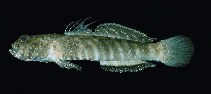
Dorsal spines (total): 7-7; Dorsal soft rays (total): 11-13; Anal spines: 1-1; Anal soft rays: 12-13. Characterized by mottled grey brown body color with about eight large, dark spots along back and diffuse branching bars on side; dorsal, anal and caudal fins yellowish; oblique dark bands on side; united pelvic fins, presence of frenum; longitudinal scale series 70-75; head without scales; greatest depth of body 4.7-5.0 in SL; rounded caudal fin, about equal to heal length (Ref. 90102). |
| Biology: |
Inhabits brackish tide pools (Ref. 1602) and sandy mangrove habitats (Ref. 37816). Also found in sand rubble bottoms in 2-10 m (Ref 90102). |
| IUCN Red List Status: |
Least Concern (LC); Date assessed: 15 August 2023 Ref. (130435)
|
| Threat to humans: |
harmless |
Source and more info: www.fishbase.org. For personal, classroom, and other internal use only. Not for publication.