
|
Ehirava fluviatilis Deraniyagala, 1929 Malabar sprat |
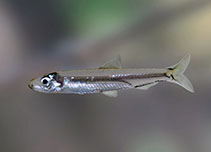
|
|
photo by
Ramani Shirantha |
| Family: | Ehiravidae (River sprats) | |||
| Max. size: | 5 cm SL (male/unsexed) | |||
| Environment: | pelagic-neritic; freshwater; brackish; marine, amphidromous | |||
| Distribution: | Asia: Southern India and Sri Lanka. | |||
| Diagnosis: | Dorsal spines (total): 0-0; Dorsal soft rays (total): 12-18; Anal spines: 0-0; Anal soft rays: 16-27. With 5 to 8 unkeeled pre-pelvic scutes, followed by an equally thin pelvic scute, all with slender ascending arms; no post-pelvic scutes. Snout pointed, lower jaw a little prominent, with barely visible teeth in each jaw; second supra-maxilla short, about half length of maxilla blade. | |||
| Biology: | Occurs in estuaries, lagoons and as much as 10 km up rivers, presumably tolerating a wide range of salinity. Reported to feed exclusively on rotifers (Ref. 6028). Marketed fresh or dried salted. | |||
| IUCN Red List Status: | Data deficient (DD); Date assessed: 02 March 2017 Ref. (130435) | |||
| Threat to humans: | harmless | |||