
|
Pareiorhaphis nudulus (Reis & Pereira, 1999) |
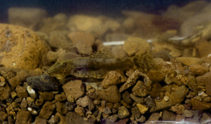
|
|
photo by
Becker, F.G. |
| Family: | Loricariidae (Armored catfishes), subfamily: Hypoptopomatinae | |||
| Max. size: | 3.4 cm SL (male/unsexed) | |||
| Environment: | demersal; freshwater | |||
| Distribution: | South America: Brazilian drainages in rio Araranguá, rio Mapituba, rio Tres Forquilhas and rio Maquine in southern Santa Catarina and northeastern Rio Grande do Sul. | |||
| Diagnosis: | Dorsal soft rays (total): 8-8; Anal soft rays: 4-5. Extreme reduction of dermal plates on the dorsal surface of body, with just the ventral and mid-ventral rows normally developed; absence of dorsal-fin spinelet and nuchal plate; absence of the connecting bone and ligament between second dorsal-fin proximal radial and rib of sixth centrum; reduction of lateral line; loss of the infraorbital sensory canal; and absence of adipose fin (versus present in all species but H. vestigipinnis). Fourth branched ray of pelvic fin longest, reaching to middle of anal fin when depressed. | |||
| Biology: | Occurs in small, shallow rivers with clear water and moderate to strong water current. Usually found among the bottom rocks and stones. | |||
| IUCN Red List Status: | Least Concern (LC); Date assessed: 07 November 2018 Ref. (130435) | |||
| Threat to humans: | harmless | |||