Sphyrna lewini, Scalloped hammerhead : fisheries, gamefish

You can sponsor this page

Sphyrna lewini (Griffith & Smith, 1834)

Scalloped hammerhead
เพิ่มการสังเกตของคุณใน Fish Watcher
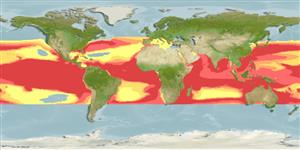
Native range | All suitable habitat | Point map | Year 2050
This map was computer-generated and has not yet been reviewed.
Sphyrna lewini   AquaMaps   Data sources: GBIF OBIS
อัพโหลดของคุณ ภาพถ่าย และ วิดีโอ
รูปภาพหลายรูป | วิดีโอ | แสตมป์ เหรียญ อื่นๆ | Google image


Guinea-Bissau territory information

Common names: [No common name]
Occurrence: native
Salinity: brackish
Abundance: | Ref:
Importance: | Ref:
Aquaculture: | Ref:
Regulations: | Ref:
Uses: no uses
Comments: Occurs in Rio Buba (Ref. 28587). Of commercial value (Ref. 26999).
National Checklist:
Territory Information: https://www.cia.gov/library/publications/resources/the-world-factbook/geos/pu.html
National Fisheries Authority:
Occurrences: Occurrences Point map
Main Ref: Compagno, L.J.V., 1984
National Database:

Common names from other countries

การจำแนกประเภท / ชื่อ ชื่อสามัญ | ชื่อพ้อง | Catalog of Fishes(สกุล, ชนิด) | ITIS | CoL | WoRMS | Cloffa

sub class Elasmobranchii (ฉลามและกระเบน) (sharks and rays) > Carcharhiniformes (Ground sharks) > Sphyrnidae (Hammerhead, bonnethead, or scoophead sharks)
Etymology: Sphyrna: Probable misspelling of sphyra (Gr.), hammer, referring to their hammer-shaped heads (See ETYFish)lewini: Patronym not identified, perhaps in honor of John Lewin (1770-1819), who illustrated early volumes of Australian natural history (this shark was described from Australia) and may be the “Mr. Lewin” who illustrated the plates in Griffith and Smith’s book (See ETYFish).
Eponymy: John William Lewin (1770–1819) was an English naturalist and engraver. [...] (Ref. 128868), visit book page.

สิ่งแวดล้อม : สิ่งแวดล้อม / เขตภูมิอากาศ / ระดับความลึก / ระยะการกระจายสินค้า นิเวศวิทยา

เกี่ยวกับทะเล,น้ำเค็ม; กร่อย pelagic-oceanic; สัตว์น้ำที่อาศัยและอพยพภายในทะเลเท่านั้น (Ref. 87829); ระดับความลึก 0 - 1043 m (Ref. 89972), usually 0 - 25 m (Ref. 26999). Tropical; 46°N - 39°S, 180°W - 180°E

การแพร่กระจาย อาณาเขต | พื้นที่จำแนกตาม FAO | ระบบนิเวศหลายระบบ | การปรากฏขึ้น,การเกิดขึ้น,พบ | ตำแหน่งบนแผนที่ | การแนะนำ | Faunafri

Circumglobal in coastal warm temperate and tropical seas (Ref. 13562). Western Atlantic: New Jersey, USA to Uruguay (Ref. 58839), including the Gulf of Mexico and Caribbean. Eastern Atlantic: western Mediterranean (Ref. 6678) to Namibia (Ref. 6812). Indo-Pacific: Persian Gulf (Ref. 68964), Red Sea, East Africa and throughout the Indian Ocean; Japan to New Caledonia, Hawaii and Tahiti. Eastern Pacific: southern California, USA to Ecuador, probably Peru.

ความยาวเมื่อครบกำหนดครั้งแรก / ขนาด / น้ำหนัก / อายุ

วัยเจริญพันธุ์: Lm 210.5, range 140 - 273 cm
Max length : 430 cm TL เพศผู้/กระเทย; (Ref. 26938); common length : 360 cm TL เพศผู้/กระเทย; (Ref. 13562); น้ำหนักสูงสุดที่มีการรายงาน: 152.4 kg (Ref. 40637); อายุสูงสุดที่ได้รายงาน: 35 ปี (Ref. 31395)

คำอธิบายสั้นๆ เครื่องมือที่ใช้ในการแยกชนิดสัตว์,สิ่งมีชีวิตออกจากกัน | สัณฐานวิทยา | ความยาวต่างๆ

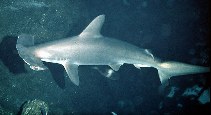
เงี่ยงครีบหลัง (รวม) : 0; เงี่ยงครีบก้น: 0. This hammerhead shark is distinguished by having the following characters: large, moderately slender body; broad, narrow bladed head, arched anterior margin with prominent median indentation and lateral indentation; nostrils with strong prenarial grooves; hind margins of eyes slightly posterior to or nearly opposite front of mouth; teeth triangular, deeply notched posteriorly, with smooth or finely serrated edges; first dorsal fin moderately high, second dorsal and pectoral fins low; upper precaudal pit transverse crescentric. Colour of body light grey or greyish brown above, shading to white below, pectoral fin tips dusky and a dark blotch on lower caudal fin lobe (Ref. 13562, 114967).
Body shape (shape guide): elongated.

ชีววิทยา     ภาคผนวก (เช่น epibenthic)

A coastal-pelagic, semi-oceanic shark occurring over continental and insular shelves and adjacent deep water, often approaching close inshore and entering enclosed bays and estuaries (Ref. 244, 11230, 58302). Found in inshore and offshore waters to about 275 m depth (Ref. 26938, 11230, 58302); has been filmed at a baited camera in 512 m depth (Lis Maclaren, pers. comm. 2005). Huge schools of small migrating individuals move pole ward in the summer in certain areas (Ref. 244). Permanent resident populations also exist (Ref. 244). Juveniles occur in coastal areas (Ref. 58784). Adults solitary, in pairs, or schools; young in large schools (Ref. 13562). Feed mainly on teleost fishes and cephalopods (Ref. 6871), also lobsters, shrimps, crabs (Ref. 30573), including other sharks and rays (Ref. 37816). Viviparous (Ref. 50449). Mature females produce 15-31, of 43-55 cm young in a litter (Ref. 26938, 1602). Considered potentially dangerous to people but often not aggressive when approached by divers (Ref. 13562). Readily available to inshore artisanal and small commercial fisheries as well as to offshore operations (Ref. 13562). Sold fresh, dried-salted, smoked and frozen; also sought for its fins and hides (Ref. 9987). Oil used for vitamins and carcasses for fishmeal (Ref. 13562). Maximum depth from Ref. 125614.

วงจรชีวิตและพฤติกรรมการผสมพันธุ์ วัยเจริญพันธุ์ | การสืบพันธุ์ | การวางไข่ | เซลสืบพันธ์ของเพศเมีย(ไข่) | ความดกของไข่ | ตัวอ่อน

Viviparous, placental (Ref. 50449), with 13-23 in a litter (Ref. 6871); 12-41 pups after a gestation period of 9-10 months (Ref.58048). Size at birth 45-50 cm TL (Ref. 13562); 39-57 cm TL (Ref.58048).

อ้างอิงหลัก อัพโหลดข้อมูลอ้างอิงของคุณ | อ้างอิง | ผู้ประสานงาน : Compagno, Leonard J.V. | ผู้ร่วมมือ

Compagno, L.J.V., 1984. FAO Species Catalogue. Vol. 4. Sharks of the world. An annotated and illustrated catalogue of shark species known to date. Part 2 - Carcharhiniformes. FAO Fish. Synop. 125(4/2):251-655. Rome: FAO. (Ref. 244)

สถานะบัญชีแดงของ IUCN (Ref. 130435: Version 2025-2 (Global))

  Critically Endangered (CR) (A2bd); Date assessed: 08 November 2018

CITES


ภัยคุกคามต่อมนุษย์

Other (Ref. 13562)


การใช้ของมนุษย์

การประมง: การค้า; การตกปลาเป็นกีฬา: ใช่

ข้อมูลเพิ่มเติม

นิเวศวิทยาเขตร้อน
รายการอาหาร (เหยื่อ)
องค์ประอบของอาหาร
การบริโภคอาหาร
การจัดสรรอาหาร
ผู้ล่า
นิเวศวิทยา
นิเวศวิทยา
Home ranges
วงจรชีวิต
การสืบพันธุ์
วัยเจริญพันธุ์
ความสมบูรณ์พันธุ์/เหงือกที่เกี่ยวข้อง
ความดกของไข่
การวางไข่
การรวมตัวของสปอน
เซลสืบพันธ์ของเพศเมีย(ไข่)
การพัฒนาไข่
ตัวอ่อน
พลวัตของสัตว์น้ำวัยอ่อน
กายวิภาคศาสตร์
พื้นที่เหงือก
สมอง
หินโสต
สรีรวิทยา
องค์ประกอบของร่างกาย
สารอาหาร
การใช้ออกซิเจน
ประเภทการว่ายน้ำ
ระดับความเร็วในการว่ายน้ำ
เม็ดสีที่มองเห็นได้
เสียงปลา
โรคและปรสิต
ความเป็นพิษ (LC50s)
พันธุศาสตร์
จีโนม
พันธุศาสตร์
ความไม่สมดุลทางเชื้อชาติ
อัตราพันธุกรรม
เกี่ยวข้องกับมนุษย์
ระบบการเพาะเลี้ยงสัตว์น้ำ
ประวัติการเพาะเลี้ยงสัตว์น้ำ
สายพันธุ์
กรณีซิเกวเทอรา
แสตมป์ เหรียญ อื่นๆ
การเข้าถึง
ผู้ร่วมมือ
อ้างอิง
อ้างอิง

เครื่องมือ

รายงานพิเศษ

ดาวน์โหลด XML

แหล่งที่มาจากอินเตอร์เน็ต

การประมาณค่าตามแบบจำลอง

อุณหภูมิที่ต้องการ (อ้างอิง 123201): 18.7 - 29, mean 27.2 °C (based on 2890 cells).
ดัชนีความหลากหลายทางวิวัฒนาการ (อ้างอิง 82804):  PD50 = 0.5006   [Uniqueness, from 0.5 = low to 2.0 = high].
Bayesian length-weight: a=0.00347 (0.00276 - 0.00435), b=3.10 (3.03 - 3.17), in cm total length, based on LWR estimates for this species (Ref. 93245).
ระดับชั้นอาหาร (อ้างอิง 69278):  4.1   ±0.5 se; based on diet studies.
Generation time: 13.7 (11.0 - 15.5) years. Estimated as median ln(3)/K based on 15 growth studies.
ความสามารถในการกลับคืนสู่ปกติ (อ้างอิง 120179):  ต่ำ, เวลาต่ำสุดที่จะทำให้ประชากรเพิ่มขึ้นเป็น 2 เท่าใช้เวลา 4.5 - 14 ปี (rm=0.028; K=0.05-0.24; tm=3-15; tmax=41.6; Fec=13-23).
Prior r = 0.06, 95% CL = 0.04 - 0.09, Based on 2 data-limited stock assessments.
ความเสี่ยงต่อการตกปลา (Ref. 59153):  Very high vulnerability (78 of 100). 🛈
ความเสี่ยงต่อสภาพภูมิอากาศ (Ref. 125649):  High vulnerability (62 of 100). 🛈
หมวดหมู่ราคา (Ref. 80766):   Medium.
สารอาหาร (Ref. 124155):  Calcium = 11.1 [2.3, 63.0] mg/100g; Iron = 0.63 [0.15, 2.02] mg/100g; Protein = 19.7 [17.6, 22.0] %; Omega3 = 0.129 [0.051, 0.334] g/100g; Selenium = 84.6 [24.3, 265.5] μg/100g; VitaminA = 9.24 [3.00, 30.53] μg/100g; Zinc = 0.642 [0.304, 1.209] mg/100g (wet weight);