Gadus morhua, Atlantic cod : fisheries, aquaculture, gamefish

You can sponsor this page

Gadus morhua Linnaeus, 1758

Atlantic cod
مشاهدات خود را اضافه کنيد در Fish Watcher
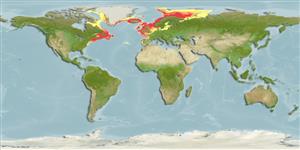
Native range | All suitable habitat | Point map | Year 2050
This map was computer-generated and has not yet been reviewed.
Gadus morhua   AquaMaps   Data sources: GBIF OBIS
را بارگذاری کني تصاوير و فيلم ها
عکس ها | فيلم ها | صداها | تمبر، سکه، متفرقه. | تصوير گوگل
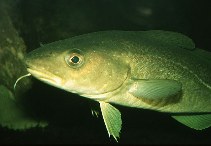
Image of Gadus morhua (Atlantic cod)
Gadus morhua
عکس از Morris, P.


US America (contiguous states) territory information

Common names: Atlantic cod, Cod, Codfish brick
Occurrence: native
Salinity: brackish
Abundance: | Ref:
Importance: commercial | Ref: FAO, 1994
Aquaculture: | Ref:
Regulations: | Ref:
Uses: no uses
Comments: Present in the continental shelf waters off the northeastern United States (Ref. 37512); Chesapeake Bay (Ref. 93252, 27549).
National Checklist:
Territory Information: https://www.cia.gov/library/publications/resources/the-world-factbook/geos/us.html
National Fisheries Authority: http://www.nmfs.gov
Occurrences: Occurrences Point map
Main Ref: Cohen, D.M., T. Inada, T. Iwamoto and N. Scialabba, 1990
National Database:

Common names from other countries

رده بندی / نام‌ها اسامي عام | مترادف | Catalog of Fishes(جنس, گونه ها) | ITIS | CoL | WoRMS | Cloffa

> Gadiformes (Cods) > Gadidae (Cods and haddocks)
Etymology: Gadus: Latin, gadus = a fish, cod? (Ref. 45335).
More on author: Linnaeus.

محیط زیست: محیط زیست / منطقه آب و هوایی / تغييرات عمق / محدوده توزیع بوم شناسي

دريايي; لب شور موجوداتی که در محدوده وسیعی از آبهای آزاد از نزدیک بستر و یا روی کف بستر، در قسمت های میان آبی تا سطح آب و در برخی گونه ها با قابلیت پرواز، زندگی و تغذیه می کنند.; اقیانوس رو (Ref. 51243); تغييرات عمق 0 - 600 m (Ref. 1371), usually 150 - 200 m (Ref. 54441). Temperate; 0°C - 15°C; 83°N - 35°N, 76°W - 86°E (Ref. 1371)

پراكنش سرزمین‌ها | مناطق سازمان خوار و بار جهاني (FAO) | اکوسیستم‌ها | ظهور | نقشه نقطه ای | معرفي | Faunafri

North Atlantic and Arctic: Ungava Bay in Canada along the North American coast to Cape Hatteras; North Carolina in the western Atlantic. East and west coast of Greenland; around Iceland; from Barents Sea including the region around Bear Island along the European coast to Bay of Biscay (Ref. 88171). Also in the Mediterranean (Ref. 125963).

طول در اولین بلوغ / اندازه / وزن / سن

بلوغ: Lm 65.4, range 31 - 74 cm
Max length : 200 cm TL جنس نر / بدون خواص جنسي; (Ref. 1371); common length : 100.0 cm TL جنس نر / بدون خواص جنسي; (Ref. 1371); بيشينه وزن گزارش شده: 96.0 kg (Ref. 9988); بيشينه سن گزارش شده: 25 سال ها (Ref. 173)

توصيف مختصر كليدهاي شناسايي | ريخت شناسي | ريخت ستجي بوسيله انداره گيري

خارهاي باله پشتي (کل) : 0; شعاع نرم باله پشتي (کل) : 44 - 55; خارهاي باله مخرجي: 0; شعاع نرم باله مخرجي: 33 - 45; مهره ها: 51 - 55. Protruding upper jaw, a conspicuous barbel on the lower jaw, and light lateral line, curved above the pectoral fins. Predorsal distance is less than one third of total length; body depth about 1/5 of total length. Color varies from brownish to greenish or gray dorsally and on upper sides, becoming pale and silvery ventrally. Peritoneum silvery.
Body shape (shape guide): fusiform / normal; Cross section: oval.

زيست شناسي     واژه نامه (بعنوان مثال epibenthic)

Widely distributed in a variety of habitats, from the shoreline down to the continental shelf. Juveniles prefer shallow (less than 10-30 m depth) sublittoral waters with complex habitats, such as seagrass beds, areas with gravel, rocks, or boulder, which provide protection from predators (Refs. 89383, 89384). Adults are usually found in deeper, colder waters. During the day, form schools and swim about 30-80 m above the bottom, dispersing at night to feed (Ref. 1371, 89385). Omnivorous; feed at dawn or dusk on invertebrates and fish, including young cod. (Ref. 1371). Migrate between spawning, feeding and overwintering areas, mostly within the boundaries of the respective stocks. Migrations >200 km are rare occurrences (Refs. 89386, 89387). Marketed fresh, dried or salted, smoked and frozen; eaten steamed, fried, broiled, boiled, microwaved and baked (Ref. 9988).

چرخه زندگی و رفتار جفت‌گیری بلوغ | تولید مثل | تخم ریزی | تخم ها | باروری | توزاد ( لارو)

Spawning occurs in winter and beginning of spring, where big schools are formed. Spawning sites are in offshore waters, at or near the bottom, in 50-200 m depth and 0-12 °C (preferred range 0-6°C) (Refs. 1371, 89387). May form spawning aggregations in the water column when bottom temperatures are unsuitable (Ref. 1371). Different spawning areas may be used in subsequent years (Ref. 89387). Embryo development lasts about 14 days (at 6°C) and larval phase lasts about 3 months(at 8°C). Fecundity ranges from 2.5 million eggs in a 5 kg female to a record of 9 million eggs in a 34 kg female. Reported number of batches spawned in an experiment is 8 - 22 (Ref. 5513). Sex ratio is nearly 50%, with slight predominance of females. Classified as a determinate multiple spawner (Ref. 40290). Older and larger cod had been found to produce larger eggs with neutral buoyancy at lower salinities. This can be crucial to egg and larval survival (Refs. 31930, 38384). Larvae are pelagic up to 2.5 months before settling on the bottom (Ref. 1371). In the Baltic, spawning cumulates in March at depths below 20 m near the bottom. The nursery areas are in the inner coastal zone. Recruitment to the fished stock starts below 2 years and peaks at about 3 years of age (Ref. 5947).

مآخذ اصلی مراجع خود را بارگذاری کنید | مراجع | هماهنگ كننده | همكاران

Cohen, D.M., T. Inada, T. Iwamoto and N. Scialabba, 1990. FAO species catalogue. Vol. 10. Gadiform fishes of the world (Order Gadiformes). An annotated and illustrated catalogue of cods, hakes, grenadiers and other gadiform fishes known to date. FAO Fish. Synop. 125(10). Rome: FAO. 442 p. (Ref. 1371)

وضعيت در فهرست قرمز IUCN (Ref. 130435: Version 2025-2 (Global))

  آسیب‌پذیر (VU) (A1bd); Date assessed: 01 August 1996

CITES

Not Evaluated

CMS (Ref. 116361)

Not Evaluated

خطر برای انسان ها

  Harmless


استفاده انسانی

ماهي گيري – شيلات: با ارزش تجاري بالا; آبزي پروري: تجاري; ماهي ها ي سرگرم كننده: بله
FAO - سیستم‌های آبزی‌پروری: تولید, نمايه گونه; ماهي گيري – شيلات: فرودها, نمايه گونه; Publication: search | FIRMS - Stock assessments | FishSource | دریای اطراف ما

اطلاعات بيشتر

ابزارها

گزارش های ويژه

بارگيری XML

منابع اينترنتي

تخمین‌ها بر اساس مدل‌ها

دمای ترجیحی (مرجع 123201): 0.5 - 10.3, mean 6.6 °C (based on 769 cells).
شاخص تنوع فیلوژنتیکی (مرجع 82804):  PD50 = 0.5625   [Uniqueness, from 0.5 = low to 2.0 = high].
Bayesian length-weight: a=0.00676 (0.00606 - 0.00755), b=3.08 (3.05 - 3.11), in cm total length, based on LWR estimates for this species (Ref. 93245).
سطح تروفیک (مرجع 69278):  4.1   ±0.2 se; based on diet studies.
Generation time: 7.7 (7.1 - 9.2) years. Estimated as median ln(3)/K based on 57 growth studies.
جهندگی (مرجع 120179):  متوسط, كمينه زمان لازم براي دو برابر شدن جمعيت 4/1 – 4/4 سال (rm=0.2-1.1; also (Ref. 36717)).
Prior r = 0.51, 95% CL = 0.34 - 0.76, Based on 66 full stock assessments.
آسیب‌پذیری ماهیگیری (Ref. 59153):  High to very high vulnerability (65 of 100). 🛈
آسیب‌پذیری اقلیمی (Ref. 125649):  Moderate vulnerability (39 of 100). 🛈
طبقه قيمت (Ref. 80766):   Medium.
مواد مغذی (Ref. 124155):  Calcium = 9.58 [5.33, 15.04] mg/100g; Iron = 0.125 [0.070, 0.223] mg/100g; Protein = 17.5 [16.2, 18.8] %; Omega3 = 0.533 [0.234, 1.174] g/100g; Selenium = 15.4 [7.3, 33.8] μg/100g; VitaminA = 10.7 [2.4, 46.7] μg/100g; Zinc = 0.422 [0.309, 0.573] mg/100g (wet weight); based on nutrient studies.