This website uses cookies to enhance your browsing experience and ensure the functionality of our site. For more detailed information about the types of cookies we use and how we protect your privacy, please visit our Privacy Information page.
×
Cookie Settings
This website uses different types of cookies to enhance your experience. Please select your preferences below:
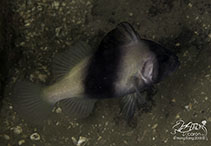
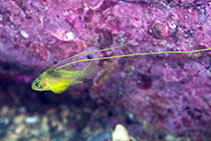
Dorsalspines (total): 8; Dorsalsoft rays (total): 13 - 16; Analspines: 2; Analsoft rays: 12 - 13. Body compressed, its width 3.3-4 in depth (Ref. 37816). Normally yellow, but sometimes nearly all black and juveniles take-on colors of the local venomous Meiacanthus blennies that are yellow or grey (Ref. 48635).
Body shape (shape guide): short and / or deep; Cross section: compressed.
Found mainly in coastal habitats in semi-silty conditions (Ref. 48635); also found near caves and crevices in rocky and coral reefs from a few meters to at least 100 m. A predator that feeds on surprisingly large prey, swallowed whole through its expandable jaws (Ref. 48635). Feeds mainly on fishes. Secretes the skin toxin grammistin under stress (Ref. 2334).
Life cycle and mating behavior Maturity | Reproduction | Spawning | Eggs | Fecundity | Larvae
Paxton, J.R., D.F. Hoese, G.R. Allen and J.E. Hanley, 1989. Pisces. Petromyzontidae to Carangidae. Zoological Catalogue of Australia, Vol. 7. Australian Government Publishing Service, Canberra, 665 p. (Ref. 7300)
IUCN Red List Status (Ref. 130435: Version 2025-2)
Preferred temperature (Ref. 123201): 24.6 - 29, mean 28 °C (based on 1680 cells).
Phylogenetic diversity index (Ref. 82804): PD50 = 0.7500 [Uniqueness, from 0.5 = low to 2.0 = high].
Bayesian length-weight: a=0.01778 (0.00680 - 0.04650), b=3.04 (2.81 - 3.27), in cm total length, based on LWR estimates for this (Sub)family-body shape (Ref. 93245).
Trophic level (Ref. 69278): 4.0 ±0.65 se; based on food items.
Fishing Vulnerability (Ref. 59153): Low vulnerability (15 of 100). 🛈