



Загрузить свой Фото и Видео
изображения | Изображение на Google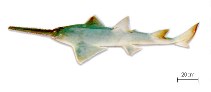 Pristis perotteti
Изображение сделано IBAMA
изображения | Изображение на Google
Изображение сделано IBAMA
Классификация / Имена народные названия | синонимы | Catalog of Fishes(род, виды) | ITIS | CoL | WoRMS | Cloffa
Пластиножаберные (акулы и скаты) (sharks and rays) > Rhinopristiformes (Shovelnose rays) > Pristidae (Sawfishes)
Etymology: Pristis: Greek, pristis = saw (Ref. 45335).
Eponymy: George Samuel Perrottet (1790–1870), also known as Georges Guerrard-Samuel Perrottet (and whose surname is sometimes given as Pérotet or Perrotet), was a Swiss-born French botanist and horticulturalist. [...] (Ref. 128868), visit book page.
More on authors: Müller & Henle.
Etymology: Pristis: Greek, pristis = saw (Ref. 45335).
Eponymy: George Samuel Perrottet (1790–1870), also known as Georges Guerrard-Samuel Perrottet (and whose surname is sometimes given as Pérotet or Perrotet), was a Swiss-born French botanist and horticulturalist. [...] (Ref. 128868), visit book page.
More on authors: Müller & Henle.
Taxonomic Remarks
Synonym of Pristis pristis (Linnaeus, 1758) according to Faria et al., 2012 (Ref. 93006:11) and Weigmann, 2016 (Ref. 106604); status confirmed by William White (pers. Comm., Feb 2016).
Окружающая среда: среда / климатическая зона / пределы глубины / диапазон распространения экология
морской; пресноводный; солоноватоводный донно-пелагический; амфидромный (Ref. 51243); пределы глубины 1 - 122 m (Ref. 55273), usually ? - 10 m (Ref. 55273). Tropical; 32°N - 19°S, 106°W - 15°E (Ref. 55273)
распространение Территории | регионы FAO | Экосистемы | места находок | карта точек | интродукции | Faunafri
Northwest Atlantic: Texas, Florida. Northeast Atlantic: West Africa. Eastern and Western Central Pacific: off northern Australia. Indo-China: East Indies. South America: Amazon near Santárem, Brazil.
Длина при первой зрелости / Размер / Вес / Возраст
половая зрелость: Lm ?, range 300 - ? cm
Max length : 650 cm TL самец/пол неопределен; (Ref. 6902); наибольший вес (опубликованные данные): 591.0 kg (Ref. 6902)
Max length : 650 cm TL самец/пол неопределен; (Ref. 6902); наибольший вес (опубликованные данные): 591.0 kg (Ref. 6902)
Краткое описание определительные ключи | морфология | морфометрия
Fewer sawteeth (normally 19, rarely 20 on a side). First dorsal fin originate in advance of the origin of the pelvic fins and much more deeply concave posterior margins of the dorsal fins. Saltwater species when fresh-caught, either dark gray or golden brown, while freshwater species are mouse gray with reddish along midback posterior to first dorsal fin, reddish posterior to lower part of sides, first dorsal pale yellow with reddish free rear corner; second dorsal, pelvic fins, caudal and lower sides posterior to first dorsal dull brick red. Reddish tint either normal or result of suffusion with blood below the skin (Ref. 6902).
Body shape (shape guide): elongated.
Body shape (shape guide): elongated.
Inhabits shallow water in the vicinity of the shore and estuarine, particularly lagoons. Generally thought to rarely descend below 10m but have been found at 122m in Lake Nicaragua (Ref. 55273). Tends to run farther upstream in large rivers. Found in temperatures higher than 20-30°C (Ref. 6902). Ovoviviparous (Ref. 50449). Minor commercial, for the curio trade (Ref. 37548).
Жизненный цикл и брачное поведение половая зрелость | размножение | нерест | икра | Плодовитость | личинки
Ovoviviparous, embryos feed solely on yolk (Ref. 50449).
Основная ссылка
Загрузите свои рекомендации | ссылки | координатор : McEachran, John | соавторы
Ferreira, E.J.G., J.A.S. Zuanon and G.M. dos Santos, 1998. Peixes comerciais do médio Amazonas. Instituto Brasileiro do Meio Ambiente e dos Recursos Naturais Renováveis. 211p. (Ref. 27548)
CITES
Not Evaluated
Угроза для людей
Harmless
Использование человеком
рыболовство: не имеет хозяйственного значения; объект спортивного рыболовства: да
FAO - Publication: search | FishSource |
дополнительная информация
Трофическая экология
Пищевые предметы (добыча)
состав пищи
потребление пищи
Продовольственные пайки
хищники
Пищевые предметы (добыча)
состав пищи
потребление пищи
Продовольственные пайки
хищники
экология
экология
экология
Динамика численности населения
Параметры роста
Макс. возраст / размер
Отношение длины к весу.
Отношение длины к длине.
Размерный состав
Преобразование массы
пополнение
численность
Параметры роста
Макс. возраст / размер
Отношение длины к весу.
Отношение длины к длине.
Размерный состав
Преобразование массы
пополнение
численность
Жизненный цикл
размножение
половая зрелость
Зрелость/Жиры относительно.
Плодовитость
нерест
Нерестовые скопления
икра
Развитие икры
личинки
динамика численности личинок
размножение
половая зрелость
Зрелость/Жиры относительно.
Плодовитость
нерест
Нерестовые скопления
икра
Развитие икры
личинки
динамика численности личинок
Анатомия
жаберная область
Мозг
Отолит
жаберная область
Мозг
Отолит
Физиология
Состав тела
Питательные вещества
Потребление кислорода
Тип плавания
Скорость плавания
Зрительные пигменты
Звук рыбы
Болезни и паразиты
Токсичность (LC50s)
Состав тела
Питательные вещества
Потребление кислорода
Тип плавания
Скорость плавания
Зрительные пигменты
Звук рыбы
Болезни и паразиты
Токсичность (LC50s)
генетика
Геном
генетика
Гетерозиготность
наследуемость
Генетическое разнообразие
Геном
генетика
Гетерозиготность
наследуемость
Генетическое разнообразие
Связанные с человеком
Системы аквакультуры
особенности рыбоводства
степень растяжения
Случаи заболевания сигуатерой
Марки, монеты и прочее.
Системы аквакультуры
особенности рыбоводства
степень растяжения
Случаи заболевания сигуатерой
Марки, монеты и прочее.
инструменты
Специальные отчеты
Проверить содержание в аквариумах | Проверить опубликованные видовые данные | Проверить опубликованные данные по аквакультуре
Скачать в формате XML
ресурсы в Интернет
AFORO (otoliths) | Aquatic Commons | BHL | Cloffa | Websites from users | Проверить FishWatcher | CISTI | Catalog of Fishes: род, виды | DiscoverLife | ECOTOX | FAO - Publication: search | Faunafri | Fishipedia | Fishtrace | GloBI | Google Books | Google Scholar | Google | IGFA World Record | OneZoom | Open Tree of Life | Otolith Atlas of Taiwan Fishes | PubMed | Reef Life Survey | Socotra Atlas | TreeBase | Tree of Life | Wikipedia: Вперёд, поиск | World Records Freshwater Fishing | Zoobank | Зоологическая летопись
Оценки, основанные на моделях
Предпочтительная температура (ссылка 123201): 26.1 - 28.5, mean 27.6 °C (based on 544 cells).
Индекс филогенетического разнообразия (ссылка 82804): PD50 = 0.5234 [Uniqueness, from 0.5 = low to 2.0 = high].
Bayesian length-weight: a=0.00832 (0.00402 - 0.01720), b=3.00 (2.80 - 3.20), in cm total length, based on LWR estimates for this species & (Sub)family-body (Ref. 93245).
Трофический уровень (ссылка 69278): 4.0 ±0.6 se; based on size and trophs of closest relatives
Generation time: 12.3 ( na - na) years. Estimated as median ln(3)/K based on 1 growth studies.
устойчивость к внешним воздействиям (ссылка 120179): низкий, минимальное время удвоения популяции 4.5-14 лет (Fec assumed to be <100).