



Megachasma pelagios Taylor, Compagno & Struhsaker, 1983
Megamouth shark
Добавить Ваши наблюдения в Fish Watcher
| Native range | All suitable habitat | Point map | Year 2050 |

|
| This map was computer-generated and has not yet been reviewed. |
| Megachasma pelagios AquaMaps Data sources: GBIF OBIS |
Загрузить свой Фото и Видео
изображения | Изображение на Google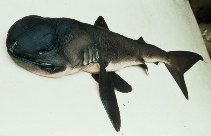 Megachasma pelagios
Male Изображение сделано Carvalho Filho, A.
изображения | Изображение на Google
Male Изображение сделано Carvalho Filho, A.
Классификация / Имена народные названия | синонимы | Catalog of Fishes(род, виды) | ITIS | CoL | WoRMS | Cloffa
Пластиножаберные (акулы и скаты) (sharks and rays) > Lamniformes (Mackerel sharks) > Megachasmidae (Megamouth sharks)
Etymology: Megachasma: megas (Gr.), large; chasma (Gr.), yawning hole or open mouth, referring to its unusually large oral cavity (See ETYFish); pelagios: Greek for “of the sea,” referring to its oceanic, epipelagic habitat (See ETYFish).
Etymology: Megachasma: megas (Gr.), large; chasma (Gr.), yawning hole or open mouth, referring to its unusually large oral cavity (See ETYFish); pelagios: Greek for “of the sea,” referring to its oceanic, epipelagic habitat (See ETYFish).
Окружающая среда: среда / климатическая зона / пределы глубины / диапазон распространения экология
морской pelagic-oceanic; мигрирует в океане (Ref. 51243); пределы глубины 5 - 600 m (Ref. 58302), usually 120 - 166 m (Ref. 48844). Deep-water; 40°N - 40°S, 180°W - 180°E
распространение Территории | регионы FAO | Экосистемы | места находок | карта точек | интродукции | Faunafri
Pacific Ocean: Japan, Indonesia, Philippines, Hawaii and California, USA. Atlantic Ocean: Brazil and Senegal.
Длина при первой зрелости / Размер / Вес / Возраст
половая зрелость: Lm ?, range 540 - ? cm
Max length : 549 cm TL самец/пол неопределен; (Ref. 85838); 709.0 cm TL (female)
Max length : 549 cm TL самец/пол неопределен; (Ref. 85838); 709.0 cm TL (female)
Краткое описание определительные ключи | морфология | морфометрия
колючие лучи спинного плавника (общее число) : 0; позвонки: 125. Body stout, tapering posteriorly (Ref. 6871), tadpole-like with larger head and tapering trunk and tail (Ref. 47786). Snout extremely short but broadly rounded (Ref 43278, 47786). Head huge, blubbery (Ref. 6871). Mouth very broad and terminal on head, with corner extending behind the eyes (Ref. 6871, 43278). Jaws huge, protrusible anteriorly but not greatly distensible laterally (Ref. 43278, 47786), lower jaw extending to snout tip (Ref. 6871). Teeth very small, numerous, hooked (Ref. 43278, 6871, 47787). Gill slits moderately long, not reaching dorsal surface of head (Ref. 6871; 43278), internal gill slits lined with dense rows of papillose gill rakers (Ref. 43278). Eyes semicircular (Ref. 47786), with no nictitating membrane (Ref. 43278, 6871, 47786). Two dorsal fins, relatively low and angular; small anal fin; long, narrow pectoral fins; moderate-sized pelvic fin; caudal fin asymmetrical, non-lunate, with a short and strong ventral lobe; upper pre-caudal pit only; caudal peduncle without keels or ridges (Ref, 6871, 43278).
Body shape (shape guide): elongated.
Body shape (shape guide): elongated.
Oceanic, possibly occurring in depths between 150 and 1,000 m (Ref. 6871). Epi- and mesopelagic (Ref. 58302). Feeds on planktivorous prey such as euphausiid shrimps, copepods and jellyfish (Ref. 6871). May also eat small midwater fishes. Ovoviviparous (Ref. 50449). Possibly less active than the basking and whale sharks (Ref. 6871). Its feeding habits and habitat suggest that it may be a rare catch in the future. Ovoviviparous, embryos feeding on yolk sac and other ova produced by the mother (Ref. 50449). Males mature by 400 cm (Ref. 6871). A bright white band on the snout just above the upper jaw may play a role in feeding behavior or with recognition of individuals (Ref. 47761). Preyed on by the semi-parasitic cookiecutter shark, Isistius brasiliensis.
Жизненный цикл и брачное поведение половая зрелость | размножение | нерест | икра | Плодовитость | личинки
Exhibit ovoviparity (aplacental viviparity), with embryos feeding on other ova produced by the mother (oophagy) after the yolk sac is absorbed (Ref. 50449). Distinct pairing with embrace (Ref. 205). Size at birth <177 cm (Ref. 85838).
Основная ссылка
Загрузите свои рекомендации | ссылки | координатор | соавторы
Compagno, L.J.V., 1984. FAO Species Catalogue. Vol. 4. Sharks of the world. An annotated and illustrated catalogue of shark species known to date. Part 1 - Hexanchiformes to Lamniformes. FAO Fish. Synop. 125(4/1):1-249. Rome, FAO. (Ref. 247)
Статус Красного Списка МСОП (Ref. 130435: Version 2025-2 (Global))
Не вызывающий беспокойства (LC) ; Date assessed: 09 November 2018
CITES
Not Evaluated
Угроза для людей
Harmless
Использование человеком
рыболовство: интереса не представляет
FAO - рыболовство: Видовой профиль; Publication: search | FishSource |
дополнительная информация
Трофическая экология
Пищевые предметы (добыча)
состав пищи
потребление пищи
Продовольственные пайки
хищники
Пищевые предметы (добыча)
состав пищи
потребление пищи
Продовольственные пайки
хищники
Динамика численности населения
Параметры роста
Макс. возраст / размер
Отношение длины к весу.
Отношение длины к длине.
Размерный состав
Преобразование массы
пополнение
численность
Параметры роста
Макс. возраст / размер
Отношение длины к весу.
Отношение длины к длине.
Размерный состав
Преобразование массы
пополнение
численность
Жизненный цикл
размножение
половая зрелость
Зрелость/Жиры относительно.
Плодовитость
нерест
Нерестовые скопления
икра
Развитие икры
личинки
динамика численности личинок
размножение
половая зрелость
Зрелость/Жиры относительно.
Плодовитость
нерест
Нерестовые скопления
икра
Развитие икры
личинки
динамика численности личинок
Физиология
Состав тела
Питательные вещества
Потребление кислорода
Тип плавания
Скорость плавания
Зрительные пигменты
Звук рыбы
Болезни и паразиты
Токсичность (LC50s)
Состав тела
Питательные вещества
Потребление кислорода
Тип плавания
Скорость плавания
Зрительные пигменты
Звук рыбы
Болезни и паразиты
Токсичность (LC50s)
Связанные с человеком
Системы аквакультуры
особенности рыбоводства
степень растяжения
Случаи заболевания сигуатерой
Марки, монеты и прочее.
Системы аквакультуры
особенности рыбоводства
степень растяжения
Случаи заболевания сигуатерой
Марки, монеты и прочее.
инструменты
Специальные отчеты
Проверить содержание в аквариумах | Проверить опубликованные видовые данные | Проверить опубликованные данные по аквакультуре
Скачать в формате XML
ресурсы в Интернет
AFORO (otoliths) | Aquatic Commons | BHL | Cloffa | Websites from users | Проверить FishWatcher | CISTI | Catalog of Fishes: род, виды | DiscoverLife | ECOTOX | FAO - рыболовство: Видовой профиль; Publication: search | Faunafri | Fishipedia | Fishtrace | GloBI | Google Books | Google Scholar | Google | IGFA World Record | OneZoom | Open Tree of Life | Otolith Atlas of Taiwan Fishes | PubMed | Reef Life Survey | Socotra Atlas | TreeBase | Tree of Life | Wikipedia: Вперёд, поиск | World Records Freshwater Fishing | Zoobank | Зоологическая летопись
Оценки, основанные на моделях
Предпочтительная температура (ссылка 123201): 9.7 - 23, mean 17.8 °C (based on 247 cells).
Индекс филогенетического разнообразия (ссылка 82804): PD50 = 1.5000 [Uniqueness, from 0.5 = low to 2.0 = high].
Bayesian length-weight: a=0.00389 (0.00180 - 0.00842), b=3.12 (2.94 - 3.30), in cm total length, based on all LWR estimates for this body shape (Ref. 93245).
Трофический уровень (ссылка 69278): 3.4 ±0.2 se; based on diet studies.
устойчивость к внешним воздействиям (ссылка 120179): очень низкий, минимальное время удвоения популяции более 14 лет (Fec assumed to be <10).