



Hochladen Photos und videos
Bilder | Briefmarken, Münzen, Verschiedenes. | Google Bild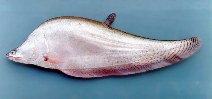 Chitala blanci
Photo von Warren, T.
Bilder | Briefmarken, Münzen, Verschiedenes. | Google Bild
Photo von Warren, T.
Klassifizierung / Names Namen | Synonyme | Catalog of Fishes(Gattung, Arten) | ITIS | CoL | WoRMS | Cloffa
> Osteoglossiformes (Bony tongues) > Notopteridae (Featherbacks or knifefishes) > Notopterinae
Etymology: Chitala: Bangladesh local name.
Eponymy: Maurice Blanc (d: 1923) was d’Aubenton’s colleague. [...] (Ref. 128868), visit book page.
Etymology: Chitala: Bangladesh local name.
Eponymy: Maurice Blanc (d: 1923) was d’Aubenton’s colleague. [...] (Ref. 128868), visit book page.
Taxonomic Remarks
species doubtful, no other Ref.
Umwelt: Milieu / Klimazone / Tiefenbereich / Verbreitungsgebiet Ökologie
; süßwasser demersal; potamodrom (Ref. 138296). Tropical
Verbreitung Territorien | FAO Gebiete | Ökosysteme | Vorkommen | Punkt Karte | Einführungen | Faunafri
Asia: mainstream of the Mekong in Thailand, Laos and Cambodia and the lower course of some tributaries.
Größe / Gewicht / Alter
Kurzbeschreibung Bestimmungsschlüssel | Morphologie | Morphometrie
Distinguishable by the presence of numerous small black spots (in the anterior half of the body), merging posteriorly into irregular oblique bands extending on the anal and caudal fins (Ref. 27732). Differs from all other species except C. lopis in having a large round black spot at base of pectoral fin. In C. blanci pectoral basal spot present in juveniles as small as 6 cm and retained throughout life (Ref. 7431).
Body shape (shape guide): fusiform / normal.
Body shape (shape guide): fusiform / normal.
Facultative air-breathing (Ref. 126274); Apparently restricted to areas with fast flowing waters, deep pools or rapids (Ref. 27732). Prefer habitats associated with rocky substrates (Ref. 37770). Occur in the mainstream of the Mekong River. Avoids tributaries and swamps (Ref. 7431). Reported to undertake short, local migrations (Ref. 37770). Active during twilight and night. Feed on fishes, crustaceans and insects. Also take smaller vertebrates (Ref. 58784). Spawning sites are found in inundated forests (Ref. 33813). Mature adults breed during the rainy season. Occasionally seen in the aquarium trade. (Ref. 12693). Has been bred for several years in Thailand (Ref. 7431).
Lebenszyklus und Paarungsverhalten Geschlechtsreife | Fortpflanzung | Ablaichen | Eier | Fruchtbarkeit | Larven
Female guards the fry (to be verified).
Hauptreferenz
Laden Sie Ihre Referenzen hoch | Referenzen | Koordinator | Partner
Roberts, T.R., 1992. Systematic revision of the old world freshwater fish family Notopteridae. Ichthyol. Explor. Freshwat. 2(4):361-383. (Ref. 7431)
IUCN Rote Liste Status (Ref. 130435: Version 2025-2 (Global))
Gefährdung zunehmend (NT) ; Date assessed: 23 February 2011
CITES
Not Evaluated
Bedrohung für Menschen
Harmless
Nutzung durch Menschen
Fischereien: kommerziell; Aquakultur: kommerziell; Aquarium: Kommerziell
FAO - Publication: search | FishSource |
Mehr Information
Trophische Ökologie
Lebensmittel (Beutetiere)
Nahrungszusammensetzung
Nahrungsaufnahme
Lebensmittelrationen
Räuber
Lebensmittel (Beutetiere)
Nahrungszusammensetzung
Nahrungsaufnahme
Lebensmittelrationen
Räuber
Populationsdynamik
Wachstumsparameter
Max. Alter/Größen
Länge-Gewicht-Rel.
Länge-Länge-Verhältnis.
Längenhäufigkeiten
Massenkonvertierung
Rekrutierung
Dichte
Wachstumsparameter
Max. Alter/Größen
Länge-Gewicht-Rel.
Länge-Länge-Verhältnis.
Längenhäufigkeiten
Massenkonvertierung
Rekrutierung
Dichte
Lebenszyklus
Fortpflanzung
Geschlechtsreife
Reifung/Kiemen rel.
Fruchtbarkeit
Ablaichen
Laichaggregationen
Eier
Eientwicklung
Larven
Larven Pop.Dyn.
Fortpflanzung
Geschlechtsreife
Reifung/Kiemen rel.
Fruchtbarkeit
Ablaichen
Laichaggregationen
Eier
Eientwicklung
Larven
Larven Pop.Dyn.
Anatomie
Kiemenoberfläche
Gehirn
Otolith
Kiemenoberfläche
Gehirn
Otolith
Physiologie
Körperliche Zusammensetzung
Nährstoffe
Sauerstoffverbrauch
Schwimmart
Schwimmgeschwindigkeit
Visuelle Pigmente
Fischgeräusche
Krankheiten und Parasiten
Toxizität (LC50s)
Körperliche Zusammensetzung
Nährstoffe
Sauerstoffverbrauch
Schwimmart
Schwimmgeschwindigkeit
Visuelle Pigmente
Fischgeräusche
Krankheiten und Parasiten
Toxizität (LC50s)
Genetik
Genom
Genetik
Heterozygotie
Vererbbarkeit
Genetische Vielfalt
Genom
Genetik
Heterozygotie
Vererbbarkeit
Genetische Vielfalt
Menschenbezogen
Aquakultur-Systeme
Aquakultur Profile
Zuchtlinien
Ciguatera-Fälle
Briefmarken, Münzen, Verschiedenes.
Aquakultur-Systeme
Aquakultur Profile
Zuchtlinien
Ciguatera-Fälle
Briefmarken, Münzen, Verschiedenes.
Tools
Zusatzinformationen
Download XML
Zusammenfassung | Punktdaten | Namen | Photos
Internet Quellen
AFORO (otoliths) | Alien/Invasive Species database | Aquatic Commons | BHL | Cloffa | Websites from users | FishWatcher Einträge suchen | CISTI | Catalog of Fishes: Gattung, Arten | DiscoverLife | ECOTOX | FAO - Publication: search | Faunafri | Fishipedia | Fishtrace | GloBI | Google Books | Google Scholar | Google | IGFA World Record | OneZoom | Open Tree of Life | Otolith Atlas of Taiwan Fishes | PubMed | Reef Life Survey | Socotra Atlas | TreeBase | Tree of Life | Wikipedia: Gehe zu, Suchen | World Records Freshwater Fishing | Zoologischer Rekord
Schätzungen auf der Grundlage von Modellen
Phylogenetischer Diversitätsindex (Ref. 82804): PD50 = 0.5166 [Uniqueness, from 0.5 = low to 2.0 = high].
Bayesian length-weight: a=0.01122 (0.00514 - 0.02450), b=3.04 (2.87 - 3.21), in cm total length, based on all LWR estimates for this body shape (Ref. 93245).
Trophische Ebene (Ref. 69278): 3.7 ±0.56 se; based on food items.
Widerstandsfähigkeit (Ref. 120179): niedrig, Verdopplung der Population dauert 4,5 - 14 Jahre. (Preliminary K or Fecundity.).