



Echinorhinus brucus (Bonnaterre, 1788)
Bramble shark
Ajouter votre observation dans Fish Watcher
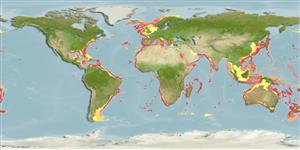
| Native range | All suitable habitat | Point map | Year 2050 |
|
| This map was computer-generated and has not yet been reviewed. |
| Echinorhinus brucus AquaMaps Data sources: GBIF OBIS |
Envoyez vos Photos et vidéos
Images | Images Google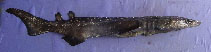 Echinorhinus brucus
Photo de Khan, M.M.
Images | Images Google
Photo de Khan, M.M.
Classification / Noms Noms communs | Synonymes | Catalog of Fishes(Genre, Espèce) | ITIS | CoL | WoRMS | Cloffa
Élasmobranches (requins et raies) (sharks and rays) > Echinorhiniformes (Bramble sharks) > Echinorhinidae (Bramble sharks)
Etymology: Echinorhinus: echinos (Gr.), spiny or sea urchin, referring to thorn-like denticles (brambles) on body; rhinus, an ancient name for sharks, from rhine (Gr.), rasp, alluding to a shark’s jagged, rasp-like skin (See ETYFish); brucus: Latin for caterpillar, presumably referring to “Chenille” or “Chenille de mer” (Sea Caterpillar), local names for this shark along the Atlantic Coast of France (type locality) in the 18th century (See ETYFish).
More on author: Bonnaterre.
Etymology: Echinorhinus: echinos (Gr.), spiny or sea urchin, referring to thorn-like denticles (brambles) on body; rhinus, an ancient name for sharks, from rhine (Gr.), rasp, alluding to a shark’s jagged, rasp-like skin (See ETYFish); brucus: Latin for caterpillar, presumably referring to “Chenille” or “Chenille de mer” (Sea Caterpillar), local names for this shark along the Atlantic Coast of France (type locality) in the 18th century (See ETYFish).
More on author: Bonnaterre.
Environnement : milieu / zone climatique / profondeur / gamme de distribution Écologie
marin bathydémersal; profondeur 10 - 900 m (Ref. 27121), usually 350 - 900 m (Ref. 45445). Deep-water; 72°N - 55°S, 98°W - 173°W (Ref. 54427)
Distribution Territoires | Zones FAO | Écosystèmes | Occurrences | Carte par point | Introductions | Faunafri
Atlantic, the Mediterranean Sea, Indian and western Pacific Oceans. Apparently absent in the Eastern Pacific (Ref. 6578).
Longueur à la première maturité / Taille / Poids / Âge
Maturité: Lm ?, range 200 - ? cm
Max length : 310 cm TL mâle / non sexé; (Ref. 247); common length : 200 cm TL mâle / non sexé; (Ref. 26999)
Max length : 310 cm TL mâle / non sexé; (Ref. 247); common length : 200 cm TL mâle / non sexé; (Ref. 26999)
Description synthétique Clés d'identification | Morphologie | Morphométrie
Épines dorsales (Total) : 0; Épines anales: 0. The bramble shark Echinorhinus brucus has thorn-like denticles on body which are very large (single denticles up to about 15mm in basal diameter in adults), sparse irregularly distributed and thorn-like with smooth basal margins, some bases fused into compound plates. Dorsal surface dark purplish-grey to brown with white denticles, ventral surface paler; sides and back may have dark spots. Tooth count 20-26/21-26.As with the other member of the family Echinorhinidae, it has a relatively short snout and stout body; two small spineless dorsal fins, close together, towards posterior part of body and originating behind pelvic fin origin. No anal fin and subterminal notch on caudal fin. Small spiracles, very short labial furrows and teeth on both jaws alike, with a central oblique bladelike cusps with up to 3 cusplets on each side (absent in juveniles) (Ref. 247, 6871, 5578).
Body shape (shape guide): elongated.
Body shape (shape guide): elongated.
A rare (Ref. 26346), large, sluggish, deepwater shark found on continental and insular shelves and upper slopes (Ref. 247). Sometimes found in shallow water (Ref. 247). Feeds on smaller sharks, bony fishes, and crabs (Ref. 247). Ovoviviparous (Ref. 205), with 15-26 young in a litter (26346). Never recorded as attacking people. Sometimes hooked by shore anglers (Ref. 5578). Processed into fishmeal. May be used in traditional medicine in southern Africa (Ref. 5578).
Cycle de vie et comportement reproducteur Maturité | Reproduction | Frai | Œufs | Fécondité | Larves
Ovoviviparous. 15 to 26 young in a litter (Ref. 26346). Size at birth between 29 and 90 cm. Distinct pairing with embrace (Ref. 205). Size at maturity unknown but adult males of 150 cm and adult females of 213 cm have been reported (Ref. 6871).
Référence principale
Téléchargez vos références | Références | Coordinateur | Collaborateurs
Compagno, L.J.V., 1984. FAO Species Catalogue. Vol. 4. Sharks of the world. An annotated and illustrated catalogue of shark species known to date. Part 1 - Hexanchiformes to Lamniformes. FAO Fish. Synop. 125(4/1):1-249. Rome, FAO. (Ref. 247)
Statut dans la liste rouge de l'IUCN (Ref. 130435: Version 2025-2 (Global))
Menacé (EN) (A2bd); Date assessed: 21 November 2019
CITES
Not Evaluated
Menace pour l'homme
Harmless (Ref. 247)
Utilisations par l'homme
Pêcheries: intérêt commercial mineur; pêche sportive: oui
FAO - pêcheries: débarquements, Résumé espèce; Publication: search | FishSource | Sea Around Us
Plus d'informations
Écologie trophique
Aliments (proies)
Composition du régime alimentaire
Consommation alimentaire
Rations alimentaires
Prédateurs
Aliments (proies)
Composition du régime alimentaire
Consommation alimentaire
Rations alimentaires
Prédateurs
Dynamique des populations
Paramètres de croissance
Âges / tailles maximales
Longueur-poids rel.
Rel. longueur-longueur.
Fréquences de longueurs
Conversion de masse
Recrutement
Abondance
Paramètres de croissance
Âges / tailles maximales
Longueur-poids rel.
Rel. longueur-longueur.
Fréquences de longueurs
Conversion de masse
Recrutement
Abondance
Cycle de vie
Reproduction
Maturité
Maturité/épines rel.
Fécondité
Frai
Agrégats de frai
Œufs
Développement de l'œuf
Larves
Dynamique des populations larvaires
Reproduction
Maturité
Maturité/épines rel.
Fécondité
Frai
Agrégats de frai
Œufs
Développement de l'œuf
Larves
Dynamique des populations larvaires
Anatomie
Surface branchiale
Cerveau
Otolithe
Surface branchiale
Cerveau
Otolithe
Physiologie
Composition corporelle
Nutriments
Consommation d'oxygène
Type de natation
Vitesse de nage
Pigments visuels
Son de poisson
Maladies et parasites
Toxicité (CL50)
Composition corporelle
Nutriments
Consommation d'oxygène
Type de natation
Vitesse de nage
Pigments visuels
Son de poisson
Maladies et parasites
Toxicité (CL50)
Génétique
génôme
Génétique
Hétérozygotie
Héritabilité
Diversité génétique
génôme
Génétique
Hétérozygotie
Héritabilité
Diversité génétique
Liées à l'homme
Systèmes d'aquaculture
Profils d'aquaculture
Souches
Cas de ciguatera
Timbres, pièces de monnaie, divers
Systèmes d'aquaculture
Profils d'aquaculture
Souches
Cas de ciguatera
Timbres, pièces de monnaie, divers
Outils
E-book | Guide de terrain | Clés d'identification | Générateur de fréquences de longueur | Outil de dynamique de population | Carte par point |
Capture-MSY |
Articles particuliers
Télécharger en XML
Sources Internet
AFORO (otoliths) | Aquatic Commons | BHL | Cloffa | Websites from users | FishWatcher | CISTI | Catalog of Fishes: Genre, Espèce | DiscoverLife | ECOTOX | FAO - pêcheries: débarquements, Résumé espèce; Publication: search | Faunafri | Fishipedia | Fishtrace | GloBI | Google Books | Google Scholar | Google | IGFA World Record | Bases de données nationales | OneZoom | Open Tree of Life | Otolith Atlas of Taiwan Fishes | PubMed | Reef Life Survey | Socotra Atlas | TreeBase | Arbre de Vie | Wikipedia: aller à, chercher | World Records Freshwater Fishing | Zoological Record
Estimations basées sur des modèles
Température préférée (Réf. 123201): 4.1 - 13.9, mean 8.5 °C (based on 1524 cells).
Indice de diversité phylogénétique (Réf. 82804): PD50 = 1.2500 [Uniqueness, from 0.5 = low to 2.0 = high].
Bayesian length-weight: a=0.00363 (0.00138 - 0.00954), b=3.13 (2.90 - 3.36), in cm total length, based on LWR estimates for this (Sub)family-body shape (Ref. 93245).
Niveau trophique (Réf. 69278): 4.4 ±0.7 se; based on diet studies.
Résilience (Réf. 120179): Très faible, temps minimum de doublement de population supérieur à 14 ans (Fec= 15-24).