



Scyliorhinus stellaris (Linnaeus, 1758)
Nursehound
เพิ่มการสังเกตของคุณใน Fish Watcher
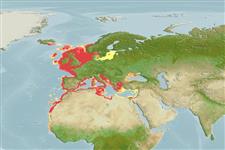
| Native range | All suitable habitat | Point map | Year 2050 |
|
| This map was computer-generated and has not yet been reviewed. |
| Scyliorhinus stellaris AquaMaps Data sources: GBIF OBIS |
อัพโหลดของคุณ ภาพถ่าย และ วิดีโอ
รูปภาพหลายรูป | วิดีโอ | แสตมป์ เหรียญ อื่นๆ | Google image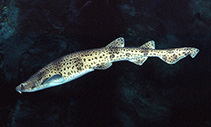 Scyliorhinus stellaris
ภาพโดย Océanopolis
รูปภาพหลายรูป | วิดีโอ | แสตมป์ เหรียญ อื่นๆ | Google image
ภาพโดย Océanopolis
การจำแนกประเภท / ชื่อ ชื่อสามัญ | ชื่อพ้อง | Catalog of Fishes(สกุล, ชนิด) | ITIS | CoL | WoRMS | Cloffa
sub class Elasmobranchii (ฉลามและกระเบน) (sharks and rays) > Carcharhiniformes (Ground sharks) > Scyliorhinidae (Cat sharks) > Scyliorhininae
Etymology: Scyliorhinus: skylion, Greek for dogfish or small shark; rhinus, from rhine (Gr.), rasp, alluding to a shark’s jagged, rasp-like skin (See ETYFish); stellaris: Latin for starry or of the stars, referring to many large and small black and white spots on body (See ETYFish).
More on author: Linnaeus.
Etymology: Scyliorhinus: skylion, Greek for dogfish or small shark; rhinus, from rhine (Gr.), rasp, alluding to a shark’s jagged, rasp-like skin (See ETYFish); stellaris: Latin for starry or of the stars, referring to many large and small black and white spots on body (See ETYFish).
More on author: Linnaeus.
สิ่งแวดล้อม : สิ่งแวดล้อม / เขตภูมิอากาศ / ระดับความลึก / ระยะการกระจายสินค้า นิเวศวิทยา
เกี่ยวกับทะเล,น้ำเค็ม เกี่ยวกับหินโสโครก; ระดับความลึก 1 - 400 m (Ref. 27000), usually 20 - 63 m (Ref. 244). Subtropical; 63°N - 12°N, 19°W - 37°E
การแพร่กระจาย อาณาเขต | พื้นที่จำแนกตาม FAO | ระบบนิเวศหลายระบบ | การปรากฏขึ้น,การเกิดขึ้น,พบ | ตำแหน่งบนแผนที่ | การแนะนำ | Faunafri
Northeast Atlantic: southern Scandinavia to Mediterranean, Morocco, Mauritania to Senegal (Ref. 125614). Records further south in the Atlantic, to Gulf of Guinea and Congo River mouth may be misidentifications of Scyliorhinus cervigoni (Ref. 127434).
ความยาวเมื่อครบกำหนดครั้งแรก / ขนาด / น้ำหนัก / อายุ
วัยเจริญพันธุ์: Lm 78.0, range 77 - 79 cm
Max length : 170 cm TL เพศผู้/กระเทย; (Ref. 26999); common length : 125 cm TL เพศผู้/กระเทย; (Ref. 244); อายุสูงสุดที่ได้รายงาน: 19 ปี (Ref. 72467)
Max length : 170 cm TL เพศผู้/กระเทย; (Ref. 26999); common length : 125 cm TL เพศผู้/กระเทย; (Ref. 244); อายุสูงสุดที่ได้รายงาน: 19 ปี (Ref. 72467)
คำอธิบายสั้นๆ เครื่องมือที่ใช้ในการแยกชนิดสัตว์,สิ่งมีชีวิตออกจากกัน | สัณฐานวิทยา | ความยาวต่างๆ
เงี่ยงครีบหลัง (รวม) : 0; เงี่ยงครีบก้น: 0. A large, fairly stocky, catshark with large and small black spots and sometimes white spots covering dorsal surface, saddle markings obsolete, small anterior nasal flaps that do not reach the mouth, no nasoral grooves, labial furrows on lower jaw only, second dorsal fin much smaller than first (Ref. 244)
Body shape (shape guide): elongated; Cross section: compressed.
Body shape (shape guide): elongated; Cross section: compressed.
A common inshore and offshore shark found on the continental shelf over rough, even rocky or coralline ground, and algal-covered bottoms. Found at depths of 1 or 2 m to at least 125 m. Feed on bottom-living invertebrates such as mollusks and crustaceans and on demersal fishes (e.g. sharks, S. canicula). Oviparous (Ref. 50449). Utilized fresh and dried salted for human consumption, and processed into fishmeal. May attain 170 cm (Ref. 27000).
วงจรชีวิตและพฤติกรรมการผสมพันธุ์ วัยเจริญพันธุ์ | การสืบพันธุ์ | การวางไข่ | เซลสืบพันธ์ของเพศเมีย(ไข่) | ความดกของไข่ | ตัวอ่อน
Oviparous, with a single egg per oviduct (Ref. 244). Embryos feed solely on yolk (Ref. 50449). Size at hatching about 16 cm (Ref. 244).
อ้างอิงหลัก
อัพโหลดข้อมูลอ้างอิงของคุณ | อ้างอิง | ผู้ประสานงาน : Compagno, Leonard J.V. | ผู้ร่วมมือ
Compagno, L.J.V., 1984. FAO Species Catalogue. Vol. 4. Sharks of the world. An annotated and illustrated catalogue of shark species known to date. Part 2 - Carcharhiniformes. FAO Fish. Synop. 125(4/2):251-655. Rome: FAO. (Ref. 244)
สถานะบัญชีแดงของ IUCN (Ref. 130435: Version 2025-2 (Global))
เปราะบาง (VU) (A2bd); Date assessed: 31 August 2020
CITES
Not Evaluated
ภัยคุกคามต่อมนุษย์
Harmless
การใช้ของมนุษย์
การประมง: มีการค้าเพียงเล็กน้อย; สถานที่แสดงสัตว์และพืชน้ำ: สถานแสดงสัตว์น้ำของรัฐ
FAO - การประมง: การลงจอด; Publication: search | FishSource | ทะเลรอบๆเรา
ข้อมูลเพิ่มเติม
พลวัตของประชากร
พารามิเตอร์การเจริญเติบโต
อายุสูงสุด / ขนาด
ความยาว-น้ำหนักสัมพันธ์
ความยาว-ความยาวสัมพันธ์
ความยาว-ความถี่
การแปลงมวล
การทดแทนที่
อุดมสมบรูณ์
พารามิเตอร์การเจริญเติบโต
อายุสูงสุด / ขนาด
ความยาว-น้ำหนักสัมพันธ์
ความยาว-ความยาวสัมพันธ์
ความยาว-ความถี่
การแปลงมวล
การทดแทนที่
อุดมสมบรูณ์
วงจรชีวิต
การสืบพันธุ์
วัยเจริญพันธุ์
ความสมบูรณ์พันธุ์/เหงือกที่เกี่ยวข้อง
ความดกของไข่
การวางไข่
การรวมตัวของสปอน
เซลสืบพันธ์ของเพศเมีย(ไข่)
การพัฒนาไข่
ตัวอ่อน
พลวัตของสัตว์น้ำวัยอ่อน
การสืบพันธุ์
วัยเจริญพันธุ์
ความสมบูรณ์พันธุ์/เหงือกที่เกี่ยวข้อง
ความดกของไข่
การวางไข่
การรวมตัวของสปอน
เซลสืบพันธ์ของเพศเมีย(ไข่)
การพัฒนาไข่
ตัวอ่อน
พลวัตของสัตว์น้ำวัยอ่อน
การแพร่กระจาย
อาณาเขต
พื้นที่จำแนกตาม FAO
ระบบนิเวศหลายระบบ
การปรากฏขึ้น,การเกิดขึ้น,พบ
การแนะนำ
BRUVS - วิดีโอ
อาณาเขต
พื้นที่จำแนกตาม FAO
ระบบนิเวศหลายระบบ
การปรากฏขึ้น,การเกิดขึ้น,พบ
การแนะนำ
BRUVS - วิดีโอ
สรีรวิทยา
องค์ประกอบของร่างกาย
สารอาหาร
การใช้ออกซิเจน
ประเภทการว่ายน้ำ
ระดับความเร็วในการว่ายน้ำ
เม็ดสีที่มองเห็นได้
เสียงปลา
โรคและปรสิต
ความเป็นพิษ (LC50s)
องค์ประกอบของร่างกาย
สารอาหาร
การใช้ออกซิเจน
ประเภทการว่ายน้ำ
ระดับความเร็วในการว่ายน้ำ
เม็ดสีที่มองเห็นได้
เสียงปลา
โรคและปรสิต
ความเป็นพิษ (LC50s)
เกี่ยวข้องกับมนุษย์
ระบบการเพาะเลี้ยงสัตว์น้ำ
ประวัติการเพาะเลี้ยงสัตว์น้ำ
สายพันธุ์
กรณีซิเกวเทอรา
แสตมป์ เหรียญ อื่นๆ
ระบบการเพาะเลี้ยงสัตว์น้ำ
ประวัติการเพาะเลี้ยงสัตว์น้ำ
สายพันธุ์
กรณีซิเกวเทอรา
แสตมป์ เหรียญ อื่นๆ
เครื่องมือ
แบบทดสอบชีววิทยา | หนังสืออิเล็กทรอนิกส์ | คู่มือภาคสนาม | เครื่องมือที่ใช้ในการแยกชนิดสัตว์,สิ่งมีชีวิตออกจากกัน | ผู้มีความชำนาญในเรื่องความถี่ของความยาว | เครื่องมือในการศึกษาชีวประวัติ | ตำแหน่งบนแผนที่ |
จับ-MSY |
รายงานพิเศษ
ตรวจสอบการบำรุงรักษาตู้ปลา | ตรวจสอบเอกสารข้อเท็จจริงเกี่ยวกับสายพันธุ์ | ตรวจสอบเอกสารข้อเท็จจริงเกี่ยวกับการเพาะเลี้ยงสัตว์น้ำ
ดาวน์โหลด XML
หน้าสรุป | ข้อมูลสำคัญ | ชื่อสามัญ | ภาพถ่าย
แหล่งที่มาจากอินเตอร์เน็ต
AFORO (otoliths) | Aquatic Commons | BHL | Cloffa | Websites from users | Check FishWatcher | CISTI | Catalog of Fishes: สกุล, ชนิด | DiscoverLife | DORIS | ECOTOX | FAO - การประมง: การลงจอด; Publication: search | Faunafri | Fishipedia | Fishtrace | GloBI | Google Books | Google Scholar | Google | IGFA World Record | ฐานข้อมูลแห่งชาติ | OneZoom | Open Tree of Life | Otolith Atlas of Taiwan Fishes | สถานแสดงสัตว์น้ำของรัฐ | PubMed | Reef Life Survey | Socotra Atlas | TreeBase | แผนภูมิชีวิตแบบต้นไม้ | Wikipedia: Go, ค้นหา | World Records Freshwater Fishing | บันทึกทางด้านสัตววิทยา
การประมาณค่าตามแบบจำลอง
อุณหภูมิที่ต้องการ (อ้างอิง 123201): 7.8 - 19.5, mean 10.9 °C (based on 836 cells).
ดัชนีความหลากหลายทางวิวัฒนาการ (อ้างอิง 82804): PD50 = 0.5000 [Uniqueness, from 0.5 = low to 2.0 = high].
Bayesian length-weight: a=0.00195 (0.00155 - 0.00246), b=3.17 (3.10 - 3.24), in cm total length, based on LWR estimates for this species (Ref. 93245).
ระดับชั้นอาหาร (อ้างอิง 69278): 4.0 ±0.3 se; based on diet studies.
ความสามารถในการกลับคืนสู่ปกติ (อ้างอิง 120179): ต่ำ, เวลาต่ำสุดที่จะทำให้ประชากรเพิ่มขึ้นเป็น 2 เท่าใช้เวลา 4.5 - 14 ปี (Fec assumed to be <100).
สารอาหาร (Ref. 124155): Calcium = 4.81 [1.06, 25.16] mg/100g; Iron = 0.325 [0.083, 0.956] mg/100g; Protein = 19.4 [16.3, 22.5] %; Omega3 = 0.117 [0.048, 0.276] g/100g; Selenium = 21.6 [6.3, 65.2] μg/100g; VitaminA = 20.9 [6.7, 69.0] μg/100g; Zinc = 0.437 [0.202, 0.902] mg/100g (wet weight);