-

- เกี่ยวกับหน้านี้
- ภาษา
- ความคิดเห็นจากผู้ใช้
- การอ้างอิง
- อัพโหลด
- สายพันธุ์ที่เกี่ยวข้อง
-



Nothobranchius oestergaardi Valdesalici & Amato, 2011
อัพโหลดของคุณ ภาพถ่าย และ วิดีโอ
รูปภาพหลายรูป | Google image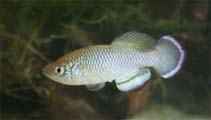 Nothobranchius oestergaardi
Male ภาพโดย Valdesalici, S.
รูปภาพหลายรูป | Google image
Male ภาพโดย Valdesalici, S.
การจำแนกประเภท / ชื่อ ชื่อสามัญ | ชื่อพ้อง | Catalog of Fishes(สกุล, ชนิด) | ITIS | CoL | WoRMS | Cloffa
> Cyprinodontiformes (Rivulines, killifishes and live bearers) > Nothobranchiidae (African rivulines)
Etymology: Nothobranchius: Greek, nothos = false + Greek, brangchia = gill (Ref. 45335); oestergaardi: The species name is dedicated to the collector and friend Kaj Østergaard, Denmark, for his contributions over a long period of time on field investigations that have led to the discovery of many new populations of Nothobranchius species in numerous countries (Ref. 86819).
Eponymy: Kaj Østergaard is a Danish friend of the authors who collected the type during a species survey in northern Zambia. [...] (Ref. 128868), visit book page.
Etymology: Nothobranchius: Greek, nothos = false + Greek, brangchia = gill (Ref. 45335); oestergaardi: The species name is dedicated to the collector and friend Kaj Østergaard, Denmark, for his contributions over a long period of time on field investigations that have led to the discovery of many new populations of Nothobranchius species in numerous countries (Ref. 86819).
Eponymy: Kaj Østergaard is a Danish friend of the authors who collected the type during a species survey in northern Zambia. [...] (Ref. 128868), visit book page.
สิ่งแวดล้อม : สิ่งแวดล้อม / เขตภูมิอากาศ / ระดับความลึก / ระยะการกระจายสินค้า นิเวศวิทยา
; น้ำจืด สัตว์น้ำหน้าดิน; pH range: 6.1 - ?. Tropical
การแพร่กระจาย อาณาเขต | พื้นที่จำแนกตาม FAO | ระบบนิเวศหลายระบบ | การปรากฏขึ้น,การเกิดขึ้น,พบ | ตำแหน่งบนแผนที่ | การแนะนำ | Faunafri
Africa: an ephemeral pool in the swamps of Lake Mweru Wantipa drainage in northern Zambia (Ref. 86819, 95524).
ขนาด / น้ำหนัก / อายุ
วัยเจริญพันธุ์: Lm ? range ? - ? cm
Max length : 3.2 cm SL เพศผู้/กระเทย; (Ref. 86819); 2.6 cm SL (female)
Max length : 3.2 cm SL เพศผู้/กระเทย; (Ref. 86819); 2.6 cm SL (female)
คำอธิบายสั้นๆ เครื่องมือที่ใช้ในการแยกชนิดสัตว์,สิ่งมีชีวิตออกจากกัน | สัณฐานวิทยา | ความยาวต่างๆ
เงี่ยงครีบหลัง (รวม) : 0; ก้านครีบอ่อนที่หาง (รวม) : 16 - 17; เงี่ยงครีบก้น: 0; ก้านครีบอ่อนที่ก้น: 16 - 17; สัตว์มีกระดูกสันหลัง: 27. Diagnosis: Males similar to other members of Nothobranchius taeniopygus species-group, differing from all other species of Nothobranchius by caudal and anal fins having broad pale sub-marginal band and dark margin (Ref. 86819). Nothobranchius oestergaardi differs from members of N. taeniopygus species-group by the following combination of characters: proximal portion of caudal fin plain red, vs. proximally irregularly spotted in N. boklundi, N. hassoni, N. kafuensis, N. polli, N. rosenstocki, N. symoensi and N. taenipygus or caudal fin covered with spots in N. brieni and N. malaissei; dorsal fin without coloured margin, vs. black fin margin in N. rubroreticulatus or broad light blue fin margin in N. brieni, N. polli and N. symoensi; body without distinct black spots anteriorly, vs. black spots present in N. rosenstocki and N. taeniopygus; anal fin striped, vs. anal fin irregularly striped in N. hassoni and N. polli, spots concentrated on proximal portion in N. brieni, N. kafuensis, and N. malaissei, or anal fin completely marbled in N. rosenstocki and N. symoensi; distal portion of anal fin cream then light blue, vs. yellow in N. boklundi, N. polli, pale yellow to yellow white in N. taeniopygus, light blue or orange in N. kafuensis, light blue in N. rubroreticulatus and red in N. rosenstocki; and with broad dark brown border, vs. narrow dark border in N. boklundi, N. brieni, N. kafuensis, N. polli, or light blue margin in N. symoensi; distal portion of pelvic fin plain light blue, vs. spotted in N. boklundi N. brieni, N. kafuensis and N. polli, plain red in N. rosenstocki, black in N. rubroreticulatus and N. taeniopygus (Ref. 86819). Nothobranchius oestergaardi males with relatively shorter caudal peduncle compared to N. boklundi, 17.0-21.3 vs. 19.1-26.6% of standard length; shallower and longer caudal peduncle compared to N. rosenstocki, 13.6-16.0 vs. 10.1-12.9% of standard length and 17.0-21.3 vs. 12.5-14.5% of standard length respectively; shallower caudal peduncle compared to N. symoens, 13.6-16.0 vs. 12.8% of standard length; longer predorsal length compared to N. hassoni, 57.5-62.5 vs. 52.8-56.4% of standard length, N. rosenstocki, 57.5-62.5 vs. 48.3-52.9% of standard length, N. rubroreticulatus, 57.5-62.5 vs. 53.3-57.6% of standard length, and N. symoensi, 57.5-62.5 vs. 55.1% of standard length; longer prepelvic length compared to N. brieni, 49.6-52.3 vs. 43.3-45.2% of standard length, N. taeniopygus, 49.6-52.3 vs. 42.1-48.9% of standard length, and N. symoensi, 49.6-52.3 vs. 48.2% of standard length; and longer preanal length compared to N. brieni, 56.2-64.4 vs. 52.9-54.5% of standard length (Ref. 86819).
Body shape (shape guide): fusiform / normal; Cross section: oval.
Body shape (shape guide): fusiform / normal; Cross section: oval.
The type locality was at the time of collection a pond about 15 m in diameter and circa 1.5 m deep at its centre, extending on one side into the grass for about further 10 m and with a depth of 0.5 m (Ref. 86819). The aquatic vegetation consisted of a Nymphea species; the water was light clay grey and turbid, with pH 6.1 and conductivity 207 µS/cm (Ref. 86819).
วงจรชีวิตและพฤติกรรมการผสมพันธุ์ วัยเจริญพันธุ์ | การสืบพันธุ์ | การวางไข่ | เซลสืบพันธ์ของเพศเมีย(ไข่) | ความดกของไข่ | ตัวอ่อน
อ้างอิงหลัก
อัพโหลดข้อมูลอ้างอิงของคุณ | อ้างอิง | ผู้ประสานงาน | ผู้ร่วมมือ
Valdesalici, S. and G. Amato, 2011. Nothobranchius oestergaardi (Cyprinodontiformes: Nothobranchiidae), a new annual killifish from Mweru Wantipa Lake drainage basin, northern Zambia. aqua, Int. J. Ichthyol. 17(2):111-119. (Ref. 86819)
สถานะบัญชีแดงของ IUCN (Ref. 130435: Version 2025-2)
Endangered (EN) (B1ab(iii)); Date assessed: 08 April 2014
CITES
Not Evaluated
ภัยคุกคามต่อมนุษย์
Harmless
การใช้ของมนุษย์
การประมง: ไม่มีผลประโยชน์
FAO - Publication: search | FishSource |
ข้อมูลเพิ่มเติม
นิเวศวิทยาเขตร้อน
รายการอาหาร (เหยื่อ)
องค์ประอบของอาหาร
การบริโภคอาหาร
การจัดสรรอาหาร
ผู้ล่า
รายการอาหาร (เหยื่อ)
องค์ประอบของอาหาร
การบริโภคอาหาร
การจัดสรรอาหาร
ผู้ล่า
พลวัตของประชากร
พารามิเตอร์การเจริญเติบโต
อายุสูงสุด / ขนาด
ความยาว-น้ำหนักสัมพันธ์
ความยาว-ความยาวสัมพันธ์
ความยาว-ความถี่
การแปลงมวล
การทดแทนที่
อุดมสมบรูณ์
พารามิเตอร์การเจริญเติบโต
อายุสูงสุด / ขนาด
ความยาว-น้ำหนักสัมพันธ์
ความยาว-ความยาวสัมพันธ์
ความยาว-ความถี่
การแปลงมวล
การทดแทนที่
อุดมสมบรูณ์
วงจรชีวิต
การสืบพันธุ์
วัยเจริญพันธุ์
ความสมบูรณ์พันธุ์/เหงือกที่เกี่ยวข้อง
ความดกของไข่
การวางไข่
การรวมตัวของสปอน
เซลสืบพันธ์ของเพศเมีย(ไข่)
การพัฒนาไข่
ตัวอ่อน
พลวัตของสัตว์น้ำวัยอ่อน
การสืบพันธุ์
วัยเจริญพันธุ์
ความสมบูรณ์พันธุ์/เหงือกที่เกี่ยวข้อง
ความดกของไข่
การวางไข่
การรวมตัวของสปอน
เซลสืบพันธ์ของเพศเมีย(ไข่)
การพัฒนาไข่
ตัวอ่อน
พลวัตของสัตว์น้ำวัยอ่อน
การแพร่กระจาย
อาณาเขต
พื้นที่จำแนกตาม FAO
ระบบนิเวศหลายระบบ
การปรากฏขึ้น,การเกิดขึ้น,พบ
การแนะนำ
BRUVS - วิดีโอ
อาณาเขต
พื้นที่จำแนกตาม FAO
ระบบนิเวศหลายระบบ
การปรากฏขึ้น,การเกิดขึ้น,พบ
การแนะนำ
BRUVS - วิดีโอ
กายวิภาคศาสตร์
พื้นที่เหงือก
สมอง
หินโสต
พื้นที่เหงือก
สมอง
หินโสต
สรีรวิทยา
องค์ประกอบของร่างกาย
สารอาหาร
การใช้ออกซิเจน
ประเภทการว่ายน้ำ
ระดับความเร็วในการว่ายน้ำ
เม็ดสีที่มองเห็นได้
เสียงปลา
โรคและปรสิต
ความเป็นพิษ (LC50s)
องค์ประกอบของร่างกาย
สารอาหาร
การใช้ออกซิเจน
ประเภทการว่ายน้ำ
ระดับความเร็วในการว่ายน้ำ
เม็ดสีที่มองเห็นได้
เสียงปลา
โรคและปรสิต
ความเป็นพิษ (LC50s)
พันธุศาสตร์
จีโนม
พันธุศาสตร์
ความไม่สมดุลทางเชื้อชาติ
อัตราพันธุกรรม
ความหลากหลายทางพันธุกรรม
จีโนม
พันธุศาสตร์
ความไม่สมดุลทางเชื้อชาติ
อัตราพันธุกรรม
ความหลากหลายทางพันธุกรรม
เกี่ยวข้องกับมนุษย์
ระบบการเพาะเลี้ยงสัตว์น้ำ
ประวัติการเพาะเลี้ยงสัตว์น้ำ
สายพันธุ์
กรณีซิเกวเทอรา
แสตมป์ เหรียญ อื่นๆ
ระบบการเพาะเลี้ยงสัตว์น้ำ
ประวัติการเพาะเลี้ยงสัตว์น้ำ
สายพันธุ์
กรณีซิเกวเทอรา
แสตมป์ เหรียญ อื่นๆ
เครื่องมือ
หนังสืออิเล็กทรอนิกส์ | คู่มือภาคสนาม | ผู้มีความชำนาญในเรื่องความถี่ของความยาว | เครื่องมือในการศึกษาชีวประวัติ | ตำแหน่งบนแผนที่ |
จับ-MSY |
รายงานพิเศษ
ตรวจสอบการบำรุงรักษาตู้ปลา | ตรวจสอบเอกสารข้อเท็จจริงเกี่ยวกับสายพันธุ์ | ตรวจสอบเอกสารข้อเท็จจริงเกี่ยวกับการเพาะเลี้ยงสัตว์น้ำ
ดาวน์โหลด XML
หน้าสรุป | ข้อมูลสำคัญ | ชื่อสามัญ | ภาพถ่าย
แหล่งที่มาจากอินเตอร์เน็ต
AFORO (otoliths) | Aquatic Commons | BHL | Cloffa | Websites from users | Check FishWatcher | CISTI | Catalog of Fishes: สกุล, ชนิด | DiscoverLife | ECOTOX | FAO - Publication: search | Faunafri | Fishipedia | Fishtrace | GloBI | Google Books | Google Scholar | Google | IGFA World Record | OneZoom | Open Tree of Life | Otolith Atlas of Taiwan Fishes | PubMed | Reef Life Survey | Socotra Atlas | TreeBase | แผนภูมิชีวิตแบบต้นไม้ | Wikipedia: Go, ค้นหา | World Records Freshwater Fishing | Zoobank | บันทึกทางด้านสัตววิทยา
การประมาณค่าตามแบบจำลอง
ดัชนีความหลากหลายทางวิวัฒนาการ (อ้างอิง 82804): PD50 = 0.5000 [Uniqueness, from 0.5 = low to 2.0 = high].
Bayesian length-weight: a=0.01122 (0.00472 - 0.02669), b=2.94 (2.74 - 3.14), in cm total length, based on LWR estimates for this (Sub)family-body shape (Ref. 93245).
ระดับชั้นอาหาร (อ้างอิง 69278): 3.1 ±0.4 se; based on size and trophs of closest relatives