



個人による観察記録の追加 Fish Watcher
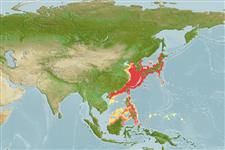
| Native range | All suitable habitat | Point map | Year 2050 |
|
| This map was computer-generated and has not yet been reviewed. |
| Engraulis japonicus AquaMaps Data sources: GBIF OBIS |
アップロード 写真 そして ビデオ
画像 | グーグルの画像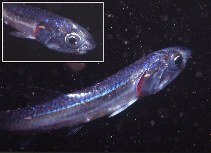 Engraulis japonicus
画像によって Zsilavecz, G.
画像 | グーグルの画像
画像によって Zsilavecz, G.
分類 / 名前 共通名の | 類義語 | Catalog of Fishes(部類, 種) | ITIS | CoL | WoRMS | Cloffa
> Clupeiformes (Herrings) > Engraulidae (Anchovies) > Engraulinae
Etymology: Engraulis: Greek, eggraulis, -eos = anchovy (Ref. 45335).
More on authors: Temminck & Schlegel.
Etymology: Engraulis: Greek, eggraulis, -eos = anchovy (Ref. 45335).
More on authors: Temminck & Schlegel.
環境:環境 / 気候帯 / 深さの範囲 / 分布範囲 生態学
海 pelagic-neritic; 海洋回遊性 (Ref. 51243); 深さの範囲 0 - 400 m (Ref. 50550). Temperate; 8°C - 30°C (Ref. 56557); 49°N - 2°N, 105°E - 155°E (Ref. 54432)
分布 領土 | 国連食糧農業機関の区域 | エコシステム | 事件 | 目的のマップ | 導入 | Faunafri
Western Pacific: southern Sakhalin Islands, Sea of Japan and Pacific coasts of Japan, and south to almost Canton/Taiwan; rare records (seems to represent stray fishes) off the coasts of Luzon and Western Mindanao, Philippines and from Manado and Ujung Pandang, Sulawesi, Indonesia (Ref. 189).
初回成熟時の長さ / サイズ / 重さ / 年齢
成熟: Lm 10.5, range 10 - 11 cm
Max length : 18.0 cm TL オス/雌雄の選別がない; (Ref. 56527); common length : 14.0 cm TL オス/雌雄の選別がない; (Ref. 56527); 最大公表体重: 45.00 g (Ref. 56527); 最大記録サイズ: 4 年 (Ref. 56527)
Max length : 18.0 cm TL オス/雌雄の選別がない; (Ref. 56527); common length : 14.0 cm TL オス/雌雄の選別がない; (Ref. 56527); 最大公表体重: 45.00 g (Ref. 56527); 最大記録サイズ: 4 年 (Ref. 56527)
簡単な記述 検索表 | 形態学 | 形態計測学
背面の脊椎 (合計) : 0; 背鰭 (合計) : 12 - 14; 肛門の骨: 0; 臀鰭: 13 - 18. Differs very little from the European anchovy (see E. encrasicolus) and can be identified from that description. Of other anchovies found in the southern part of its distribution, only species of Encrasicholina and Stolephorus are of similar appearance, but all have small spine-like pre-pelvic scutes (usually 2 to 7 scutes). Thryssa have compressed bodies and a keel of scutes along belly.
Body shape (shape guide): elongated; Cross section: oval.
Body shape (shape guide): elongated; Cross section: oval.
Occurs in large schools near the surface, mainly in coastal waters but as far out as over 1,000 km from the shore. Tends to move more northward and inshore in spring and summer. Juveniles associate with drifting seaweed (Ref. 12114, 12115). Feeds on copepods, but also on other small crustaceans, molluscan larvae, fish eggs and larvae and diatoms. Marketed fresh and salted, processed into fishmeal and oil (Ref. 12484).
ライフサイクルと交尾行動 成熟 | 繁殖 | 放精 | 卵 | 生産力 | 幼生
主な参考文献
参考文献のアップロード | 参考文献 | コーディネーター | 協力者
Whitehead, P.J.P., G.J. Nelson and T. Wongratana, 1988. FAO Species Catalogue. Vol. 7. Clupeoid fishes of the world (Suborder Clupeoidei). An annotated and illustrated catalogue of the herrings, sardines, pilchards, sprats, shads, anchovies and wolf-herrings. FAO Fish. Synop. 125(7/2):305-579. Rome: FAO. (Ref. 189)
CITES
Not Evaluated
人間に対する脅威
Reports of ciguatera poisoning (Ref. 4690)
人間の用途
水産業: 高い商業の; 水産養殖: 商業; 餌: usually
FAO - 水産業: 着陸, 種の外形; Publication: search | FishSource | 私達の周りの海
より多くの情報
解剖学
カマ
脳
オトリス
カマ
脳
オトリス
用具
オーガニック・クイズ | 電子書籍 | 野外観察図鑑 | 検索表 | 長さ-周波数ウィザード | 生活史の基盤ツール | 目的のマップ |
キャッチ-MSY |
特記事項
XMLをダウンロードして下さい
インターネットの情報源
AFORO (otoliths) | Aquatic Commons | BHL | Cloffa | Websites from users | Check FishWatcher | CISTI | Catalog of Fishes: 部類, 種 | DiscoverLife | ECOTOX | FAO - 水産業: 着陸, 種の外形; Publication: search | Faunafri | Fishipedia | Fishtrace | GloBI | Google Books | Google Scholar | Google | IGFA World Record | 国のデーターベース | OneZoom | Open Tree of Life | Otolith Atlas of Taiwan Fishes | PubMed | Reef Life Survey | Socotra Atlas | TreeBase | 生命の木 | Wikipedia: 行く, 検索する | World Records Freshwater Fishing | Zoobank | 動物に関する記録
モデルに基づく推定値
好ましい温度 (参照 123201): 8.1 - 23.3, mean 18.4 °C (based on 139 cells).
系統多様性指数 (参照 82804): PD50 = 0.5020 [Uniqueness, from 0.5 = low to 2.0 = high].
Bayesian length-weight: a=0.00389 (0.00263 - 0.00576), b=3.10 (2.98 - 3.22), in cm total length, based on LWR estimates for this species & Genus-body shape (Ref. 93245).
栄養段階 (参照 69278): 3.1 ±0.1 se; based on diet studies.
Generation time: 1.1 (1.0 - 1.8) years. Estimated as median ln(3)/K based on 16 growth studies.
回復力 (参照 120179): 高い, 15か月以下の倍増期間の最小個体群 (K=1.05; tm=1-2; tmax=3).
Prior r = 0.90, 95% CL = 0.60 - 1.36, Based on 3 full stock assessments.
栄養素 (Ref. 124155): Calcium = 148 [56, 380] mg/100g; Iron = 0.698 [0.304, 1.783] mg/100g; Protein = 18.3 [16.8, 19.7] %; Omega3 = 1.57 [0.74, 3.39] g/100g; Selenium = 14.9 [5.6, 40.7] μg/100g; VitaminA = 7.51 [1.30, 42.67] μg/100g; Zinc = 0.939 [0.527, 1.630] mg/100g (wet weight);